

Homeowners and constructors now prioritise greater sustainability when creating bespoke homes. But what is sustainable construction? We explore sustainable building in our blog.
The UK government has set a target of zero carbon emissions by 2050 and as the construction sector produces one of the largest chunks of emissions across the country, making construction more sustainable to remove the emissions gap is essential. Sustainability ensures that human well-being can be maintained long-term with the finite planetary resources available, so sustainable construction needs to consider the construction phase and the materials used, how these are created or sourced and their lifespan.
Homeowners and constructors now prioritise greater sustainability when creating bespoke homes. But what is sustainable construction? It’s more than simply using eco-friendly materials. It’s about the design, construction and maintenance of buildings that consider environmental, social and economic factors. This article explores key considerations of sustainable building construction and how to reduce environmental impact, benefit the homeowners or building users and remain viable financially over the long term.
What is Sustainability in Construction?
Sustainable construction is a holistic approach which brings three main benefits, which are frequently referred to as the three pillars of sustainability: economic, environmental and social.
Economic Sustainability
Some believe sustainable building materials mean greater expense, but frequently the opposite is actually true. By using quality materials, less deterioration takes place and fewer repairs are needed. Quality construction materials also generally mean greater savings on energy and utility bills.
Environmental Sustainability
Sustainable building materials and renewable energy will help to reduce the environmental footprint of the project. Considering the environment whilst building a sustainably designed property can massively reduce or even eradicate the negative impact on the environment and also create the opportunity for positive impact by generating energy with solar panels, improving waste management or increasing biodiversity.
Social Sustainability
Sustainable construction that considers the social aspects of the project means one that benefits the individuals and the communities connected with the building with lower carbon emissions and energy savings. There are also benefits for the construction teams to be gained by working in a more carbon-free environment.
The Seven Principles of Sustainable Construction
There are seven main principles of sustainable construction the industry uses as a framework to make the sector greener and reduce its overall carbon footprint. These principles are:
- Sustainable Design – taking the three pillars of sustainability and focusing on achieving net zero targets for the construction within the design
- Durability – selecting sustainable building materials which will last a long time makes economic and environmental sense
- Energy Efficiency – this encompasses the design phase, techniques used during the planning, building and ongoing upkeep of the property as well as ensuring the property is built to produce 75% fewer CO₂ emissions than current energy efficiency requirements – according to the Future Homes Standards which is due to be introduced this year
- Waste Reduction – recycling materials where possible and limiting the amount of waste produced during the construction process
- Indoor Air Quality – improving natural ventilation with solar chimneys, wind towers and ridge vents for better air quality and airflow
- Water Conservation – using more sustainable water consumption with low-flow fixtures, rainwater harvesting, efficient irrigation, regular maintenance and leak detection to reduce the amount of water used in construction
- Sustainable Building Materials – some examples include approved timber and concrete made from natural fibres as well as sustainably sourced materials
Why is Sustainable Construction Important?
Quite aside from the fact the government has set a net zero target for 2050, the construction industry is one of the biggest contributors to carbon emissions and resource depletion meaning that building sustainably is a vital step to protecting the planet for generations to come.
Sustainable construction is vital for a host of reasons, the main ones being:
- Healthier living
- Long-term economic savings
- Minimising pollution
- Lowering carbon footprints
- Wellbeing of occupants
- Increased property value
- Lower maintenance costs
- Improved air quality
- Natural lighting
With the acceleration of climate change, embracing sustainable building design and construction is no longer an option but a necessity.
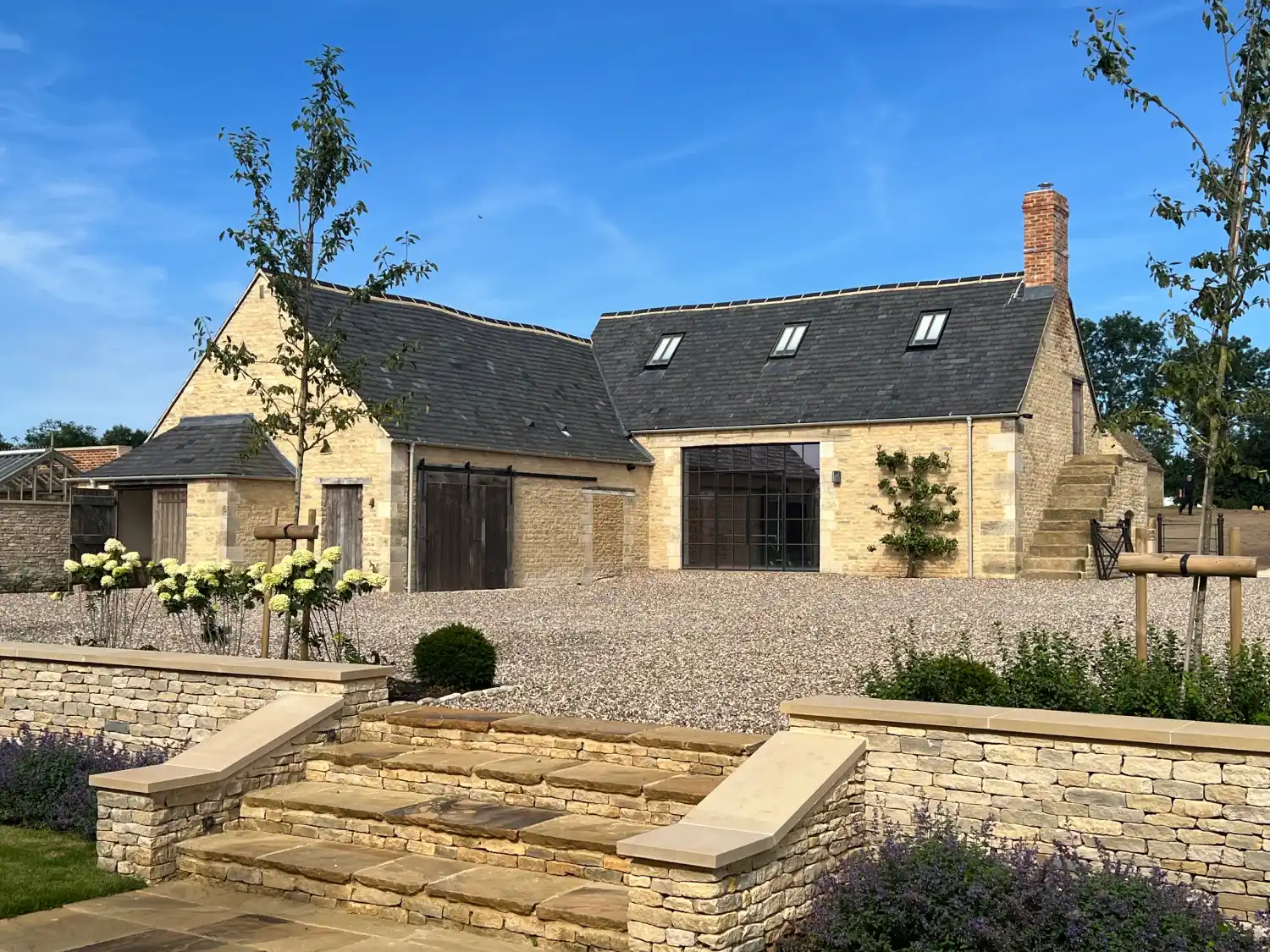
Building Sustainably for Bespoke Projects
When you’re considering a bespoke project, especially in an AONB (Area of Outstanding National Beauty) such as the Cotswolds, it is essential to engage an architect and contractor who is an expert in sustainable building construction and can advise on material selection and design to help reach sustainability goals. When creating a bespoke build, consider using smart technology to reduce energy and water waste and prioritise local materials and labour to reduce transportation emissions and support the local economy. Consider some sustainable building design strategies such as:
- Passive Design – utilising natural light, ventilation and thermal mass to reduce energy consumption
- Energy Efficiency – install high-energy rated windows, LED lighting and energy-efficient appliances
- Water Conservation – implement rainwater harvesting and greywater recycling systems
- Renewable Energy Integration – select solar panels, wind turbines or ground-source heat pumps
- Green Roofing and Living Walls – enhance biodiversity and improve insulation
Sustainable Building Materials
One of the most effective ways to practice sustainable construction for your bespoke build is to select eco-friendly, sustainable building materials such as:
- Reclaimed wood – reducing deforestation, or choose sustainably sourced timber
- Corten steel – durable and it weathers to a stunning patina that protects the metal
- Bamboo – a fast-growing, renewable alternative for flooring and other structural elements
- Recycled stone and brick – minimises waste and gives a timeless aesthetic
- Natural insulation materials – such as hempcrete and other materials which offer thermal efficiency
Cranatt Construction: Experts in Sustainable Construction
As a company, we work exclusively in the Cotswolds meaning we manage to achieve many of the targets for sustainable construction, using local craftsmen and materials traditionally used for property building in the district. View some of our completed projects for inspiration.
With Cranatt, you can be sure of a stunning property that is also eco-conscious and cost-effective in the long run – built to last. We have built passive houses for clients previously and are fully able to deliver an energy-efficient design that not only meets – but exceeds – your expectations.
To discuss your bespoke project and your sustainable building goals, get in touch with our experts today.