

Luxury homes are defined by more than impressive architecture and expansive spaces. The materials selected throughout a property play a central role in its appearance, performance, longevity and overall sense of quality.
From natural Cotswold stone and bespoke timber to premium metals, specialist glass and handcrafted finishes, the right luxury building materials can transform both interiors and exteriors.
This guide explores some of the most sought-after luxury building materials, highlighting what makes each option desirable and how they contribute to exceptional residential design.
What Makes A Building Material Luxurious?
A luxury building material is defined by more than its price. Quality, craftsmanship, durability and visual appeal all contribute to a material’s premium character, while rarity and provenance can add exclusivity and heritage. Exceptional materials are often selected for their ability to age gracefully, perform reliably and complement sophisticated architectural designs.
Bespoke finishes, specialist fabrication and skilled installation can further enhance their appeal, allowing materials to be tailored to a specific property or aesthetic. Regardless of whether the luxury building materials are naturally distinctive or carefully crafted, they should be able to combine performance with individuality.

8 Top Luxury Building Materials
1. Natural Stone
Marble, limestone, granite and travertine all bring timeless character and uniqueness to any luxury home looking to incorporate natural stone. They can be used for flooring, walls, worktops, bathrooms and architectural pieces that come with distinctive colours, variations and textures.
2. Premium Timber
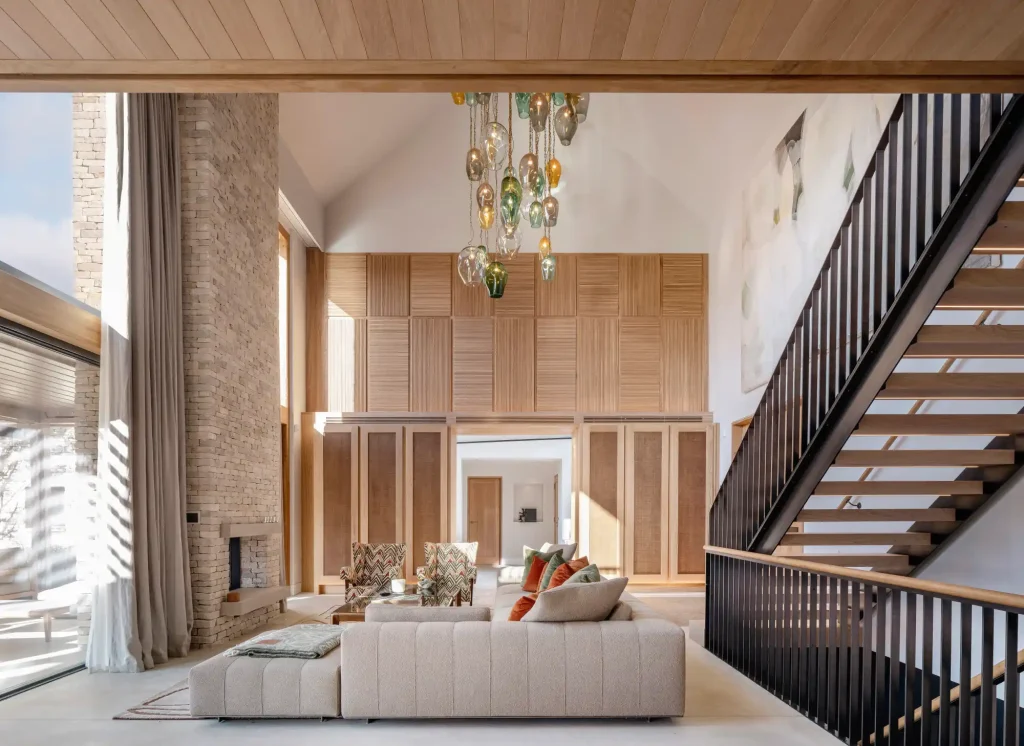
Premium, responsibly sourced timber adds warmth, texture and craftsmanship to sophisticated interiors. It can be incorporated into flooring, cabinetry, wall panelling, staircases and bespoke joinery, creating elegant finishes that complement both traditional and contemporary architectural styles.
3. Architectural Glass
Architectural glass is a high-performance luxury building material that can maximise natural light and your connection to the surrounding views of your home. Floor-to-ceiling glazing, expansive windows, glass walls and contemporary features can make luxury interiors feel brighter and far more spacious.
4. High-End Metals
Brass, bronze, copper and stainless steel can introduce refined detail, contrast and character throughout a luxury property. These premium metals are suitable for balustrades, fittings, façades and bespoke architectural elements, offering both visual impact and lasting performance.
5. Porcelain And Large-Format Tiles
Premium porcelain and large-format tiles combine durability, versatility and sophisticated aesthetics. Their expansive dimensions can minimise visible joints, creating seamless surfaces across kitchens, bathrooms, floors and living areas.
6. Brick And Masonry
Handmade, bespoke and carefully selected bricks can give luxury homes exceptional character and visual depth. Used across façades and architectural features, quality masonry introduces texture, individuality and traditional craftsmanship.
7. Polished Concrete And Microcement
Polished concrete and even microcement create sophisticated, contemporary surfaces with a clean and seamless appearance. They work particularly well across floors, walls, bathrooms and open-plan interiors. Each option is ideal for those looking for luxury building materials that deliver a minimalist aesthetic while providing durable, practical finishes.
8. Sustainable And Reclaimed Materials
Sustainable, reclaimed and responsibly sourced materials can bring individuality and provenance to luxury residential projects. Reclaimed timber, stone and other lower-impact materials combine environmental considerations with craftsmanship, authenticity and distinctive aesthetics.
For those looking for conversation pieces and absolute individuality, reclaimed materials are key.
How To Choose Materials For A Luxury Home
Choosing materials for a luxury home requires a balance between visual appeal and long-term performance. Aesthetic preferences should work alongside durability, maintenance requirements and the demands of the property’s location, from coastal regions to urban environments.
Materials should also complement the home’s architectural style while supporting sustainability goals and remaining aligned with the overall budget. Consider how luxury building materials like stone, timber, metal, glass and decorative finishes will interact across rooms and exterior spaces. A carefully coordinated palette creates continuity without compromising the property’s wider design vision.
Combining Luxury Materials For A Cohesive Design
Combining different luxury materials can bring depth, warmth and character to a home while creating a sophisticated overall aesthetic. Designers can introduce contrast by pairing natural stone with rich timber, refined metals with textured plaster or smooth finishes with tactile surfaces. To maintain cohesion, each material should relate to the wider palette through complementary colours, tones, textures, proportions or detailing.
Statement luxury building materials should be balanced with more understated finishes to prevent the design from becoming overwhelming. Carrying key materials and finishes between interior and exterior spaces can also create visual continuity, helping every element feel connected and intentionally considered.
Bring Your Vision to Life
Creating an exceptional bespoke home requires expertise, precision and outstanding craftsmanship. With extensive experience in luxury residential projects, we combine premium materials, thoughtful detailing and expert workmanship to deliver distinctive, enduring spaces. From concept to completion, we focus on quality and interior design at every stage, creating homes that reflect each client’s vision.
Get in touch with the Cranatt team today to discuss the finest details about your upcoming project and bring your vision to life.
Frequently Asked Questions
What materials make a house look luxurious?
High-end materials like marble, natural stone, bespoke timber, expansive glass and sophisticated metalwork can give a property an elevated appearance. However, luxury ultimately comes from how these materials are designed, combined and expertly installed.
What is the most expensive building material for a home?
There is no single most expensive option, as pricing depends on rarity, quality, sourcing, availability and installation complexity. Rare stones, specialist timbers and individually crafted finishes can all represent significant investments in luxury residential projects.
Are luxury building materials more durable?
Many premium materials are valued for their strength, resilience and ability to age gracefully. However, quality alone does not guarantee longevity. Appropriate specification, expert installation and regular care are essential to ensure materials perform as intended.
Are natural materials better for luxury homes?
Natural materials are highly regarded for their distinctive textures, organic character and individual variations, making them popular within luxury interiors. That said, advanced engineered materials can offer comparable visual appeal alongside excellent consistency, functionality and durability.
What materials add the most value to a luxury home?
Investing in enduring, high-quality materials can strengthen a property’s visual appeal and desirability. Nevertheless, value is influenced by much more than materials alone, with location, architectural design, craftsmanship, functionality and the overall standard of the property all contributing.